What We Miss If We Never Try Co-writing
Sunday mornings are slow around my house. They weren’t always slow, particularly when my children were small and I was still in the thick of co-writing appointments, various recording projects, and networking functions. But these days, with a nocturnal teenager and a focus on my own music and teaching, I find myself looking forward to weekends again and the creative space they offer.
We get into music because we love some aspect of making, playing, or recording. For some, that love fosters a social element that is valuable to us, such as the opportunity to play in a band, or lean on the talents and skills of others to make what we make, or simply a good reason to shake our stuff on stage. For others, making music is a solo mission, and the joy and excitement we experience comes partially from controlling the process ourselves.
So why are we writers often encouraged to start cowriting, like some kind of one-size-fits-all obvious next step in the journey of a songwriter or artist? After all, collaboration seems to be the engine behind almost all commercially-driven music, and with credits upwards of 4,5, or even 10 writers on a given song, the message seems to be "the more the merrier.” Furthermore, if we decide not to co-write, are we sabotaging our own musical careers, with the internal narrative that we’re just too chicken, too stubborn, or too lacking in skill to do it?
Everything I teach and every service I offer is a response to a personal struggle I have experienced while trying to make music my living. Turns out, there’s good company at the bottom, and one of my missions in this industry is to lift the veil and correct perceptions that warp a musician’s vision and makes it difficult to make decisions for themselves. The choice to cowrite is one of those decisions we can exercise control over, no apologies or excuses needed.
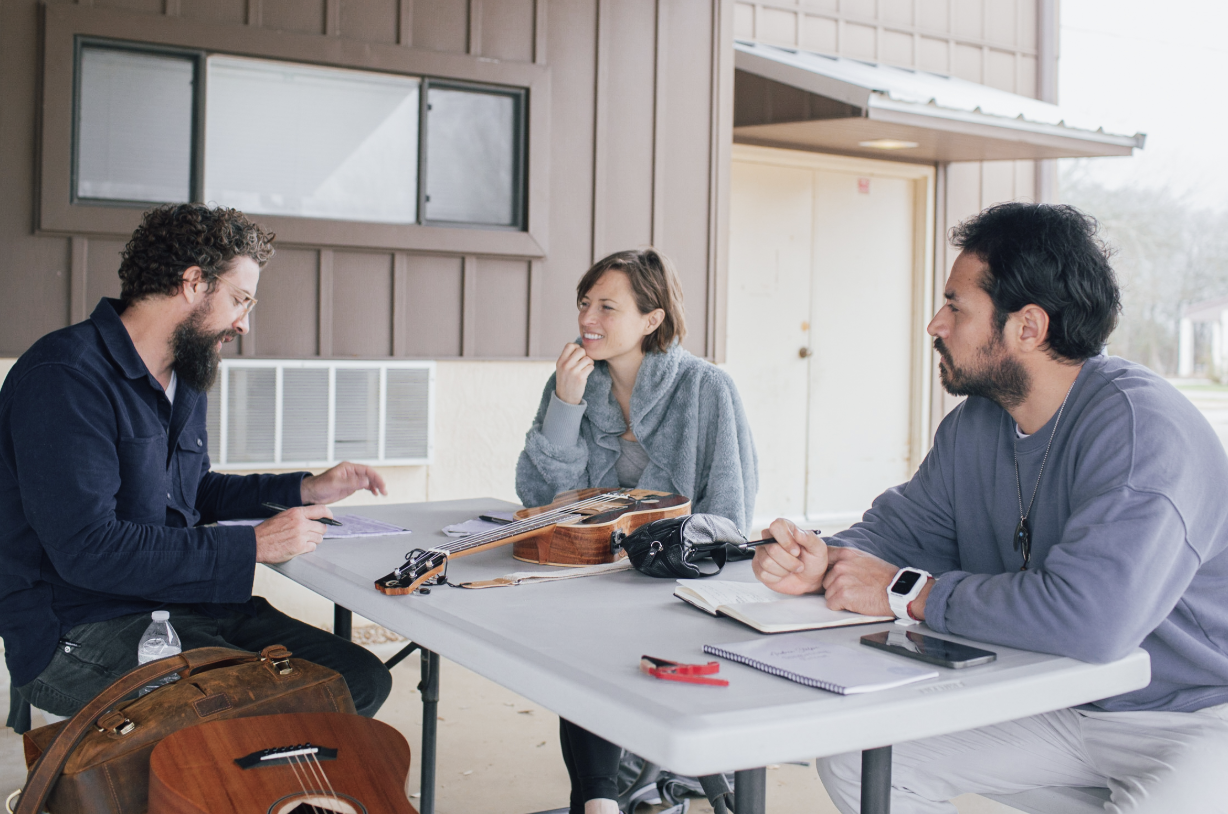
Cowriting has clear benefits. It’s our first stop along the way to improving the quality of our songwriting, with the caveat that we’re writing with people who bring a valuable perspective into our writing room. It’s also our first ring of networking, as the songs we finish with others now get played for those in our co-writer’s circles, too. If the co-writing relationship is working, we finish more songs and do it more quickly, and over time, we see our writing style expand as our co-writer brings skills like instrumental acuity or vocal talent into our scope to play with. These are best-case scenarios, and like any venture, there are varying levels of success on any given day, that hopefully balance out to something positive in the end.
But co-writing can also be a hindrance to some artists and writers. We might spend significant time and energy managing a strained relationship, or find we’re not matched well with regard to skill level, vision or intent. We might even find that co-writing creates too much variability in the songs and styles we write, and we get carried away from what we really want to make that leans heavy into our own artistic sound. If we’re not located in a major music city, we could end up writing with who is available instead of who we write good songs with.
Let me just point out that I’ve written unremarkable songs with remarkable writers, and remarkable songs with unremarkable writers. Who knows why. A hit songwriter and friend of mine once told me some relationships are better without a song between them, and if he ever had to write again with his best friend, also a hit writer, he’d poke his eye out with a pencil.
Not all co-writing experiences are worth it. Like many things in life, we don’t know which ones until after. Though co-writing can be an incredible experience when it’s working, it also doesn’t have to be an Elton John-Bernie Taupin lifelong song-affair. Some cowrites happen and then they’re over, and we move onto other things despite having written something extraordinary together.
The point is, each of us can approach co-writing as an opportunity to explore a way of working that shakes up our normal process by adding variables. Sometimes those variables are predictable, such as pursuing a specific co-writer for their sound and skill or network connections. Sometimes the variables are unpredictable, such as taking a chance on a new writer because you simply enjoy their company. But whether or not we co-write, and with whom, can be approached with a level of clarity if we personally identify what we want from each experience.
It’s okay to determine you’re only doing it for specific reasons, such as meeting new people, creating something different than your usual brand of cereal, connecting with your local music community, or networking as a career-oriented musician. Thinking like a business-person doesn’t diminish the artfulness of the music you make. In fact, taking decisions into your own hands makes it even more likely your music will fulfill you, and reach the ears of those who need it and don’t even know it yet.
So before you assume you need to be co-writing, take a few moments to consider why. It just might be that you know what you need better than anybody else.
Stay creative,