
Articles
Songwriting & Music Industry Guidance

Should Songwriters Use AI to Write Songs?
Whether AI has a place in music is a hot topic amongst creatives. I would like to address this topic from the perspective of songwriting, and specifically, learning to write more powerful songs. The following thoughts are my opinions, and the policy I currently follow within programs I offer and my online community.

Why It’s Hard to Get Heard, Even if You’re Good
I don’t often write about the business side of songwriting. The reason is that it’s vast, with nooks and crannies that aren’t my area of expertise, and I value my own time too much to waste other people’s time on articles that talk a lot but don’t say much. That said, here I go talking business. I’ll stick to the side I know, and only dip a toe in areas I hire out for expert advice.

The Catalog You Build While Nobody’s Watching
A few months ago a collaborator reached out looking for a recording we’d done of a song about 5 years ago. I hadn’t even remembered writing the song, but figured I’d recognize it when I re-listened. For the next hour, I went on a search and rescue mission that came up empty, except for about 30 others I had very little recollection having worked on.

When Is A Song Done?
It's a good question, though one that many of us ask sheepishly, hearing the rhetoric in the words as they leave our mouths. With an answer that varies by song and by person, it can seem pointless to even ask. But those are often the best questions to mull over, and in fact, I believe the conclusion is less subjective than it first appears.

A Week at Our Songwriting Retreat: What It's Really Like
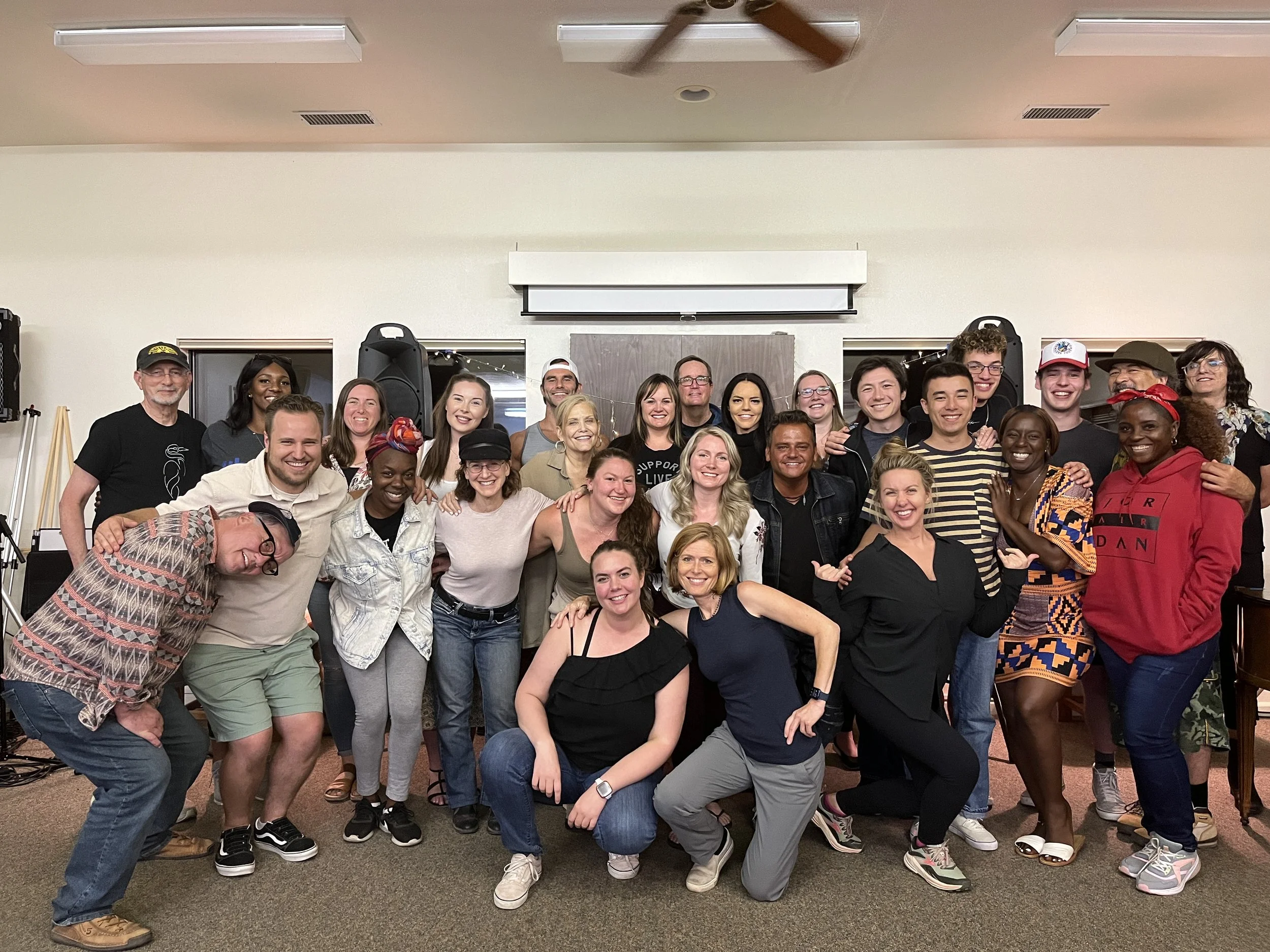
"Does it work?" someone asked me once about my retreats. A startling question, but a fair one. Several times a year, 20-30 songwriters gather in a remote location with me, members of my team, and a guest artist and songwriter.

Writing Your First Song: A Place to Start
I started writing songs like anyone else, by the seat of my early 1990s grunge pants. My older brother was in a band, and I felt like I could write something they could sing. They were a ska band, and the only problem was that I played piano and listened to Madonna. Naturally, my writing didn't fit the project. The band broke up after high school, but I kept writing. I remember so clearly the feeling of liking certain lines and melodies, and feeling trapped in certain chord progressions. I had no idea there were tools that could improve my craft, because I was all inspiration at that stage.

You Are a Small Business Owner (You Just Forgot)
There isn't a lot of guidance in the music industry that prepares artists and songwriters for their inevitable success. The majority of content around making it in the music industry, I'll admit including my own articles, Instagram reels, and YouTube videos, assumes the path forward for any musician with the stars of commerce in their eyes will be steep and rocky.

Gold, Granite and Wood
One of the hardest things as a songwriter is sitting with unfinished work. As I write this, I feel the vibration of three half-completed songs, several projects with collaborators at various stages of development, an anxious pull to free up more time to practice my instrument, and a sense that no matter what I finish today, it’s just a brush-stroke along the lines of a life-size canvas.

4 Questions to Find Your Song
Inspiration is generous, but it certainly isn't tidy. In my house, it hands me a feeling, a phrase, a fragment of melody, a mood I can't quite name and then it walks off with me standing there holding something important that lacks shape. My instinct is to push harder, to demand that the idea reveal itself. But pushing rarely works on something this half-formed.

Honesty Isn't Always Best
I remember my first trips to Nashville as a new writer, eager to soak up every drop of good advice that might help me write commercially viable songs. As is often the case, that advice came packaged for general use. Though much of it was inarguably true, how I was supposed to apply it to my own situation was up to me. And as with most wisdom earned through experience, the advice around honesty in songwriting didn’t fully land until I’d written enough dishonest songs to feel the difference.

Simple Acts of Strength
I used to equate good songs with sophisticated songwriting. If you had asked me what sophisticated meant, I’d have described it as chords I could barely play, completely original melodies and harmonic movement, and a lyric theme nobody had ever expressed before. Clearly by that measure, I wouldn’t be threading my own needle any time soon. It took awhile to recognize that complicated didn’t equal inspired, and simple didn’t equate to forgettable.

Why Waiting for Inspiration Slows You Down
I was never very good at Blackjack. Too much about gambling leaks out my control, and when my husband and I were $80 bucks down one whimsical Vegas trip back in 2007, I was quick to put down the cobbash and head for the buffet table instead. At least there I knew I’d get a return on investment.

What We Miss If We Never Try Co-writing
Sunday mornings are slow around my house. They weren’t always slow, particularly when my children were small and I was still in the thick of co-writing appointments, various recording projects, and networking functions. But these days, with a nocturnal teenager and a focus on my own music and teaching, I find myself looking forward to weekends again and the creative space they offer.

How to Turn Your Poems into Lyrics
There’s a reason why poetry doesn’t pay the bills. I may not be in my early twenties anymore, but I’m pretty sure Robert Frost never wrote a “banger.” A sacred and beautiful, moving expression of personal grief, joy, and humanity and a companion through the troubling times exposing life’s true meaning, sure. But a banger? My apologies if you live alone in a cabin in the woods.

Melody Makes All the Difference
We songwriters often assume that if a song isn’t landing emotionally, the problem must be the lyric. We spend hours revising, tightening phrases, searching for stronger rhymes, and scratching entire sections only to try accommodating them again in a later version. But sometimes there comes a point where no changes seem to actually improve the song. This is our signal that we might be tweaking the wrong element, and the lyric isn’t the problem. We might be asking lyrics to do a job that actually belongs to the melody.

How to Finish Songs
We all stall halfway through writing a song sometimes, and when that happens, it’s tempting to assume we’ve run out of inspiration. But stalling usually isn’t a motivation problem, It’s that finishing a song requires a different set of skills than starting one, and most of us were never taught that distinction clearly enough to recognize when we’ve crossed that threshold.

How to Write Lyrics That Connect: The Power of Specificity
If your lyrics sound meaningful but don’t quite connect, this is probably why. When I was 16, my brother gave me a mix tape of Sting and Police songs. That tape got me through a summer job scraping, washing, and painting the concrete walls of my dad’s basement. What I knew about lyric writing I learned from Sting, and as it turns out, Sting’s style of songwriting didn’t look as good on me as it did on him.

The Heart of Traditional Country
No style of songwriting is as dedicated to storytelling as country music, and specifically, traditional country. This style grew out of the blues, merged with folk, and is the bedrock of commercial country and singer-songwriter styles. Though some artists bring to the genre a strong harmonic backing or melodic interest, it really is a style built on three chords and the truth. Traditional country most often relies on lyric to make the song go.

What Defines the Singer-Songwriter Style, and How to Find Yourself Within It
I spend a lot of time talking about the differences between musical styles, not as categories to constrain us, but as lenses that help us better understand who we already are as writers. When we can recognize the characteristics of a style—especially the one we’re naturally drawn to—we gain clarity about why we sound the way we do, and how we might become even more ourselves.

Why Industry Has No Place in Sustainable Creative Expression
We often talk about creativity as if it only matters when it can be measured, shared, and preserved. But the truth is, sustainable creative expression doesn’t require industry, charts, or audiences. It requires only us, showing up with curiosity and letting what’s inside find its way out.